Day in the Life of an Allied Healthcare Professional
Real Experiences from Lab, Radiology & Operation Theatre Experts
Allied healthcare professionals are the backbone of the medical system. While doctors diagnose and treat patients, it is the allied healthcare team that ensures accurate reports, safe procedures, and smooth hospital operations.
From pathology labs and radiology departments to operation theatres, these professionals work behind the scenes every day to save lives.
In this blog, we take you through a realistic “day in the life” of allied healthcare professionals, featuring insights inspired by alumni and industry experts working in laboratories, radiology departments, and operation theatres.
Why Allied Healthcare Professionals Are in High Demand
With the rapid expansion of hospitals, diagnostic centers, and specialty clinics across India, the demand for skilled allied healthcare professionals has grown tremendously.
Key reasons for this rising demand:
- Increase in diagnostic procedures
- Growth of multi-specialty hospitals
- Advancements in medical technology
- Shortage of skilled paramedical staff
- 24×7 healthcare services
Courses like Medical Lab Technology (MLT), Radiology & Imaging Technology, and Operation Theatre Technology (OTT) offer stable careers, respect, and growth opportunities.
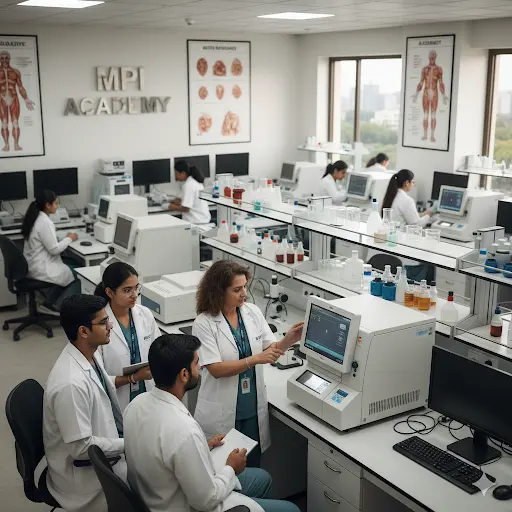
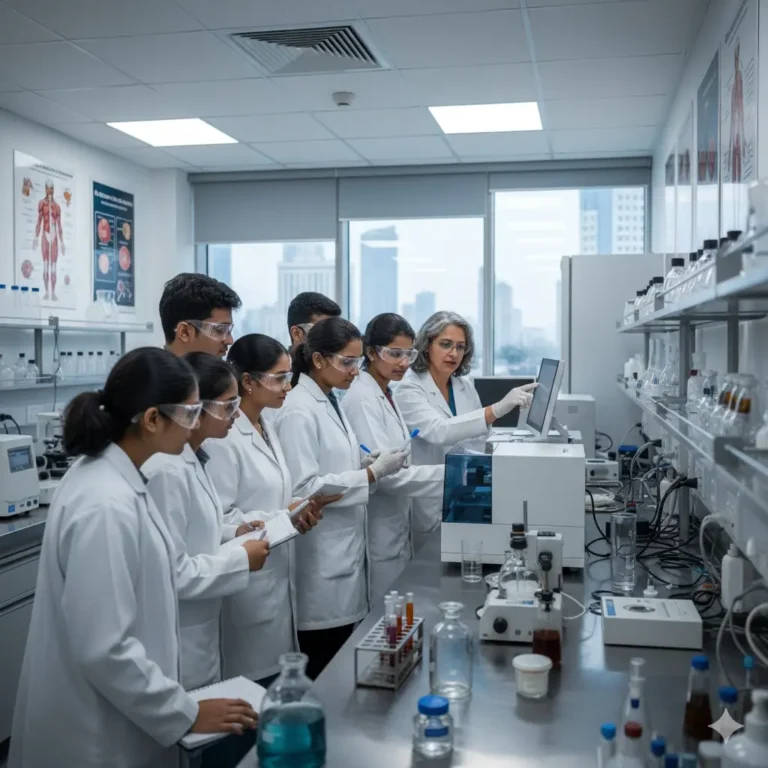
A Day in the Life of a Medical Laboratory Technician (MLT)
🧪 Morning: Sample Collection & Preparation
The day usually starts with:
- Receiving patient samples (blood, urine, tissue)
- Proper labeling and documentation
- Following strict hygiene and safety protocols
Alumni Insight (MLT Graduate):
“Accuracy is everything in the lab. Even a small mistake can affect a patient’s diagnosis. Our practical training helped us become confident from day one.”
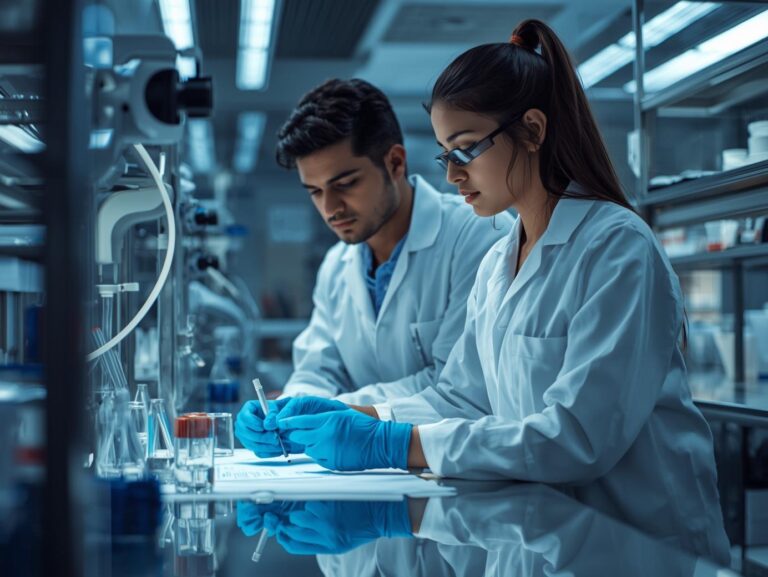
🔬 Midday: Testing & Reporting
MLT professionals perform:
- Biochemistry tests
- Hematology analysis
- Microbiology procedures
- Quality checks on lab equipment
Reports must be accurate, timely, and confidential.
📊 Evening: Final Reports & Coordination
- Cross-checking results
- Coordinating with doctors
- Updating digital lab systems
MLT professionals play a critical role in clinical decision-making.
A Day in the Life of a Radiology & Imaging Technician
🩻 Morning: Patient Preparation & Imaging
Radiology technicians begin their day by:
- Preparing imaging equipment
- Positioning patients correctly
- Performing X-ray, CT, MRI, or ultrasound scans
- Ensuring radiation safety
Expert Insight (Radiology Technician):
“Technology is advancing fast. But human skill is still essential to get the right image. Practical exposure during training makes a huge difference.”
💻 Midday: Image Processing & Assistance
- Processing digital images
- Ensuring image clarity
- Assisting radiologists in diagnosis
- Handling emergency imaging cases
Radiology professionals must work calmly under pressure, especially in trauma or emergency cases.
🏥 Evening: Equipment Care & Documentation
- Maintaining imaging machines
- Recording procedures
- Coordinating with hospital staff
Radiology technicians are among the most trusted professionals in diagnostic medicine.
A Day in the Life of an Operation Theatre (OT) Technician
🏥 Early Morning: OT Preparation
OT technicians often start early:
- Sterilizing instruments
- Preparing operation theatre setup
- Checking surgical equipment
- Ensuring infection control protocols
Alumni Insight (OTT Graduate):
“The OT is a high-responsibility area. Our hands-on training helped us understand discipline, teamwork, and precision.”
🔪 During Surgery: Assisting the Surgical Team
OT technicians assist by:
- Handing instruments to surgeons
- Maintaining sterile conditions
- Monitoring equipment
- Supporting anesthesiology team
This role requires focus, discipline, and teamwork.
🧼 Post-Surgery: Cleanup & Readiness
- Cleaning and sterilizing OT
- Preparing for the next surgery
- Maintaining inventory records
OT technicians are essential to safe and successful surgeries.
Skills That Define a Successful Allied Healthcare Professional
Across all departments, professionals share common skills:
- ✔ Strong practical knowledge
- ✔ Attention to detail
- ✔ Communication skills
- ✔ Emotional intelligence
- ✔ Discipline & ethics
- ✔ Ability to work under pressure
These skills are developed best through practical-oriented education and clinical exposure.
How Maharashtra Paramedical Institute (MPI) Prepares Students for Real Hospital Life
At Maharashtra Paramedical Institute (MPI), Mumbai, education goes beyond classrooms.
What Makes MPI Different:
- ✔ Practical & skill-based training
- ✔ Experienced faculty from healthcare industry
- ✔ Clinical exposure & hospital orientation
- ✔ Industry-relevant curriculum
- ✔ Career guidance & job assistance
MPI alumni are known for being hospital-ready, confident, and reliable professionals.
Career Growth & Future Scope
Allied healthcare professionals can grow into roles such as:
- Senior Technician
- Department Supervisor
- Lab/Radiology Manager
- Educator or Trainer
- Specialized Technician
With experience and upskilling, salaries and responsibilities increase significantly.