Complete Guide to Paramedical Courses After 10+2
Eligibility, Syllabus, Duration & Career Outcomes (2026 Updated)
Choosing the right career after 10+2 can shape your entire future. While many students think only about MBBS, engineering, or nursing, there is a rapidly growing and highly rewarding alternative — Paramedical Courses.
Paramedical professionals are the backbone of the healthcare system. They assist doctors in diagnosis, imaging, laboratory testing, and surgeries. With India’s healthcare sector expanding rapidly, paramedical courses after 12th are among the most job-oriented career options in 2026.
This complete guide covers:
- ✅ Eligibility criteria
- ✅ Course duration
- ✅ Detailed syllabus
- ✅ Career outcomes
- ✅ Salary expectations
- ✅ Why studying in Mumbai gives you an advantage
What Are Paramedical Courses?
Paramedical courses are professional healthcare programs that train students in:
- Medical Laboratory Technology
- Radiology & Imaging Technology
- Operation Theatre Technology
- Emergency & trauma support
- Diagnostic procedures
These courses focus on skill-based, practical training, preparing students to work directly in hospitals, diagnostic centers, and surgical units.
Unlike long medical degrees, paramedical courses allow students to enter the healthcare industry quickly with specialized skills.
Eligibility for Paramedical Courses After 10+2
Most paramedical diploma programs have simple eligibility requirements.
Basic Eligibility:
- ✔ Passed 10+2 (Science stream preferred)
- ✔ PCB (Physics, Chemistry, Biology) recommended
- ✔ Minimum age: 17 years
- ✔ Basic medical fitness
Some diploma courses may also accept students after 10th, depending on the institute.
Students who want a medical career without becoming a doctor find paramedical education to be the ideal pathway.
Popular Paramedical Courses After 12th
Let’s explore the most in-demand paramedical courses in detail.
1️⃣ Diploma in Medical Laboratory Technology (DMLT)
What is DMLT?
DMLT trains students to perform laboratory tests that help doctors diagnose diseases.
Medical Lab Technicians handle:
- Blood tests
- Urine analysis
- Biochemical testing
- Microbiology testing
- Hematology procedures
DMLT Course Duration
1 to 2 years (depending on institute structure)
DMLT Syllabus Overview
- Human Anatomy & Physiology
- Clinical Biochemistry
- Microbiology
- Pathology
- Hematology
- Immunology
- Laboratory Management
- Practical Lab Training
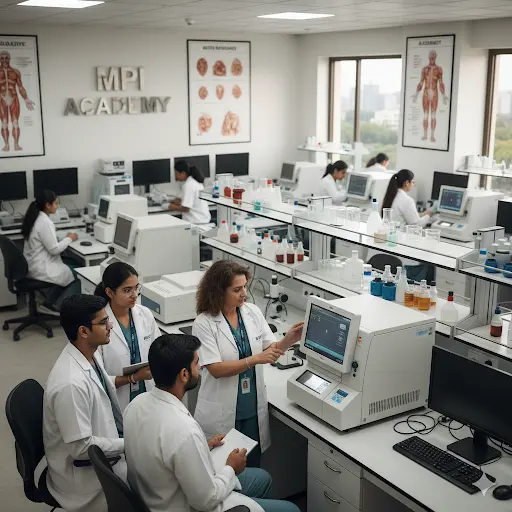
The course includes extensive hands-on lab practice.
Career Outcomes After DMLT
Graduates can work as:
- Medical Laboratory Technician
- Lab Assistant
- Pathology Technician
- Research Lab Technician
Workplaces:
- Hospitals
- Diagnostic centers
- Pathology labs
- Blood banks
2️⃣ Diploma in Radiology & Imaging Technology (DRIT)
What is DRIT?
Radiology technicians operate imaging machines used for diagnosing internal injuries and diseases.
They work with:
- X-Ray machines
- CT scans
- MRI
- Ultrasound
- Digital imaging systems
Radiology is one of the highest-demand allied healthcare careers.
DRIT Course Duration
1 to 2 years
DRIT Syllabus Overview
- Human Anatomy
- Radiation Physics
- Radiographic Techniques
- CT & MRI Basics
- Radiation Safety
- Patient Positioning
- Imaging Technology
- Clinical Training
Students receive practical exposure to imaging equipment.
Career Outcomes After DRIT
Graduates can work as:
- X-ray Technician
- CT/MRI Technician
- Radiology Assistant
- Imaging Technologist
Workplaces:
- Hospitals
- Diagnostic imaging centers
- Trauma care hospitals
- Specialty clinics
3️⃣ Diploma in Operation Theatre Technology (DOTT)
What is DOTT?
OT Technicians assist surgeons during operations and ensure a sterile surgical environment.
They are responsible for:
- Preparing operation theatre
- Sterilizing equipment
- Assisting during surgery
- Managing surgical instruments
DOTT Course Duration
1 to 2 years
DOTT Syllabus Overview
- Anatomy & Physiology
- Surgical Procedures
- Sterilization Techniques
- Infection Control
- OT Equipment Handling
- Anaesthesia Basics
- Patient Care
Practical OT exposure is essential in this course.
Career Outcomes After DOTT
Graduates can work as:
- OT Technician
- Surgical Assistant
- Anaesthesia Assistant
- Emergency OT Staff
Workplaces:
- Multi-specialty hospitals
- Surgical centers
- Emergency trauma units
Career Scope of Paramedical Courses in India
The healthcare sector in India is growing rapidly due to:
- Expansion of private hospitals
- Rising diagnostic awareness
- Increasing lifestyle diseases
- Growing aging population
- Medical tourism
This creates high demand for trained paramedical professionals.
Paramedical professionals can work in:
- Government hospitals
- Private hospitals
- Corporate healthcare chains
- Diagnostic labs
- Research institutions
Salary After Paramedical Courses
Average Starting Salary:
₹15,000 – ₹25,000 per month
With 3–5 Years Experience:
₹30,000 – ₹45,000 per month
Specialized & Experienced Professionals:
₹50,000+ per month
Metro cities like Mumbai offer better salary packages and growth opportunities.
Why Choose Paramedical Courses in Mumbai?
Mumbai is one of India’s largest healthcare hubs.
Benefits of studying in Mumbai:
- Access to top hospitals
- Better internship exposure
- Advanced diagnostic centers
- Strong placement opportunities
- Exposure to modern medical technology
Students studying in Mumbai often get better career growth opportunities.
Why Choose Maharashtra Paramedical Institute (MPI), Mumbai?
If you are looking for a paramedical institute in Mumbai, choosing the right institute is crucial.
Maharashtra Paramedical Institute (MPI) offers:
- ✔ Practical-focused education
- ✔ Experienced healthcare faculty
- ✔ Clinical exposure
- ✔ Industry-relevant syllabus
- ✔ Skill-based learning approach
- ✔ Career guidance & job support
- ✔ Central Mumbai location (Mahim)
MPI focuses on developing hospital-ready professionals, not just certificate holders.