Complete Guide to Allied Healthcare Courses After 10+2: Eligibility, Career Scope & Future Opportunities
Choosing the right career after 10+2 is one of the most important decisions in a student’s life. While many students focus only on MBBS, nursing, or engineering, Allied Healthcare courses have emerged as one of the best career options in healthcare with faster job entry, strong demand, and excellent growth opportunities.
This blog is a complete guide to Allied Healthcare courses after 10+2, covering eligibility, popular courses, career scope, salary prospects, and why Allied Healthcare education is a smart choice in 2026 and beyond.
What Are Allied Healthcare Courses?
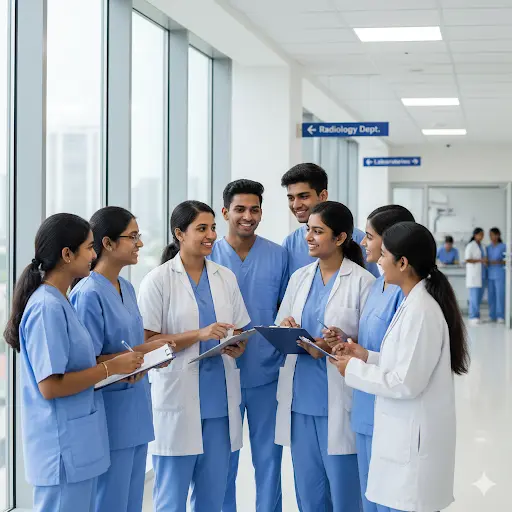
Allied Healthcare courses train students to become skilled healthcare professionals who support doctors in diagnosis, treatment, surgery, and patient care.
Allied Healthcare professionals work in:
- Hospitals
- Diagnostic laboratories
- Radiology & imaging centers
- Operation theatres
- Emergency & trauma care units
They form the backbone of the healthcare system.
Why Choose Allied Healthcare Courses After 10+2?
Allied Healthcare education is ideal for students who want:
- Early entry into the healthcare industry
- Skill-based, practical learning
- Job-oriented courses
- Respectable and stable careers
- Opportunities in India and abroad
Key Benefits:
- ✔ Shorter course duration
- ✔ High job demand
- ✔ Affordable education compared to MBBS
- ✔ Strong placement opportunities
- ✔ Career growth with experience
Eligibility for Allied Healthcare Courses After 10+2
Most allied healthcare courses have simple eligibility criteria:
- ✅ Passed 10+2 (Science stream)
- ✅ PCB (Physics, Chemistry, Biology) preferred
- ✅ Minimum age usually 17 years
- ✅ Medically fit
Some diploma courses may also accept students after 10th, depending on the program.
Popular Allied Healthcare Courses After 10+2
1. Diploma in Medical Laboratory Technology (DMLT)
Role:
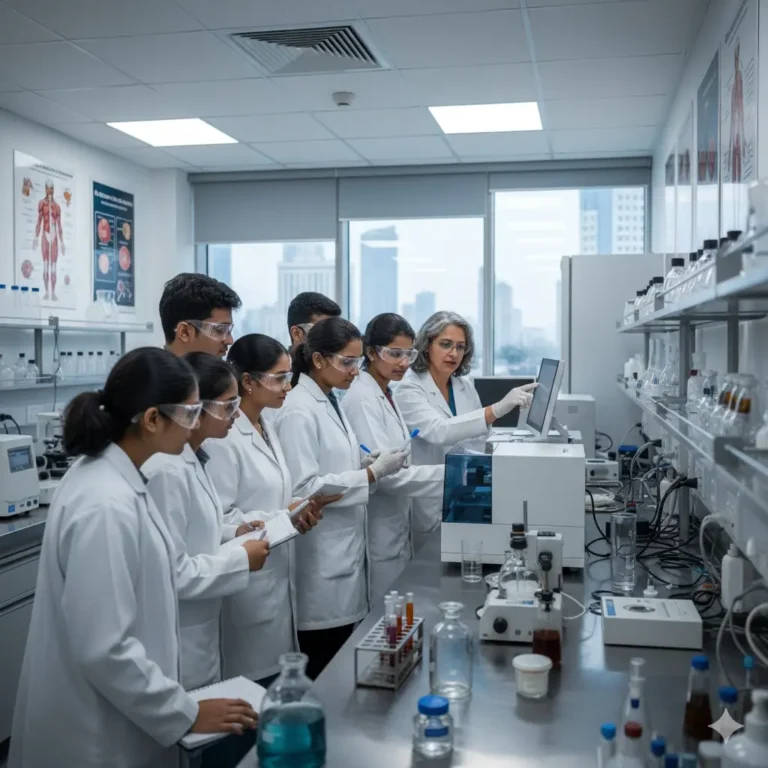
Medical Laboratory Technicians perform diagnostic tests that help doctors detect diseases.
Subjects Include:
- Pathology
- Biochemistry
- Microbiology
- Hematology
Career Options:
- Pathology labs
- Hospitals
- Diagnostic centers
- Research labs
2. Diploma in Radiology & Imaging Technology (DRIT)
Role:
Radiology technicians operate imaging equipment to diagnose internal conditions.
Technologies Covered:
- X-ray
- CT Scan
- MRI
- Ultrasound
Career Options:
- Hospitals
- Diagnostic imaging centers
- Trauma care units
Radiology is considered one of the highest-paying Allied Healthcare fields.
3. Diploma in Operation Theatre Technology (DOTT)
Role:
OT technicians assist surgeons before, during, and after surgeries.
Key Responsibilities:
- OT setup
- Sterilization
- Surgical assistance
- Equipment handling
Career Options:
- Multi-specialty hospitals
- Surgical centers
- Emergency units
Duration of Allied Healthcare Courses
| Course | Duration |
|---|---|
| DMLT | 1–2 Years |
| DRIT | 1–2 Years |
| DOTT | 1–2 Years |
Most courses include practical training and clinical exposure, which is crucial for job readiness.
Career Scope After Allied Healthcare Courses
The demand for Allied Healthcare professionals is increasing due to:
- Growth of healthcare infrastructure
- Rise in diagnostic testing
- Expansion of private hospitals
- Aging population
- Preventive healthcare awareness
Allied Healthcare professionals can work in:
- Government hospitals
- Private hospitals
- Diagnostic labs
- Corporate healthcare chains
- Medical colleges
Salary After Allied Healthcare Courses
Average Salary in India:
- Freshers: ₹15,000 – ₹25,000 per month
- 2–5 years experience: ₹30,000 – ₹45,000 per month
- Specialized professionals: ₹50,000+ per month
Salaries are higher in metro cities like Mumbai and increase with experience and specialization.
Skills Required for a Successful Allied Healthcare Career
To succeed in this field, students must develop:
- Practical & technical skills
- Attention to detail
- Communication skills
- Discipline & ethics
- Ability to work under pressure
- Basic computer knowledge
Institutes that focus on hands-on training prepare students better for hospital environments.
Why Study Allied Healthcare Courses in Mumbai?
Mumbai is one of India’s biggest healthcare hubs, offering:
- Top multi-specialty hospitals
- Advanced diagnostic centers
- Better internship exposure
- Higher salary potential
- More job opportunities
Studying in Mumbai gives students a strong industry advantage.
Allied Healthcare Courses at MPI Academy
MPI Academy, Mumbai offers job-oriented Allied Healthcare courses designed as per industry needs.
Why Choose MPI:
- ✔ Practical-focused education
- ✔ Experienced faculty
- ✔ Clinical exposure
- ✔ Industry-relevant curriculum
- ✔ Career guidance & placement support
- ✔ Central Mumbai location (Mahim)
MPI focuses on creating skilled, confident, and employable healthcare professionals.
Final Thoughts
Allied Healthcare courses after 10+2 offer a smart, stable, and respected career path for students who want to enter healthcare without long medical degrees.
With the right institute, proper training, and skill development, Allied Healthcare professionals can build successful and fulfilling careers in India’s growing healthcare industry.
📞 Start Your Allied Healthcare Career After 10+2
Explore job-oriented courses at
MPI Academy, Mumbai
🌐 Website: www.mpiacademy.co.in
📍 Location: Mahim, Mumbai
📲 Contact us today for admissions & counseling